
Garage Workshop Electrical Planning: A Guide for Sandy Homeowners
November 24, 2026
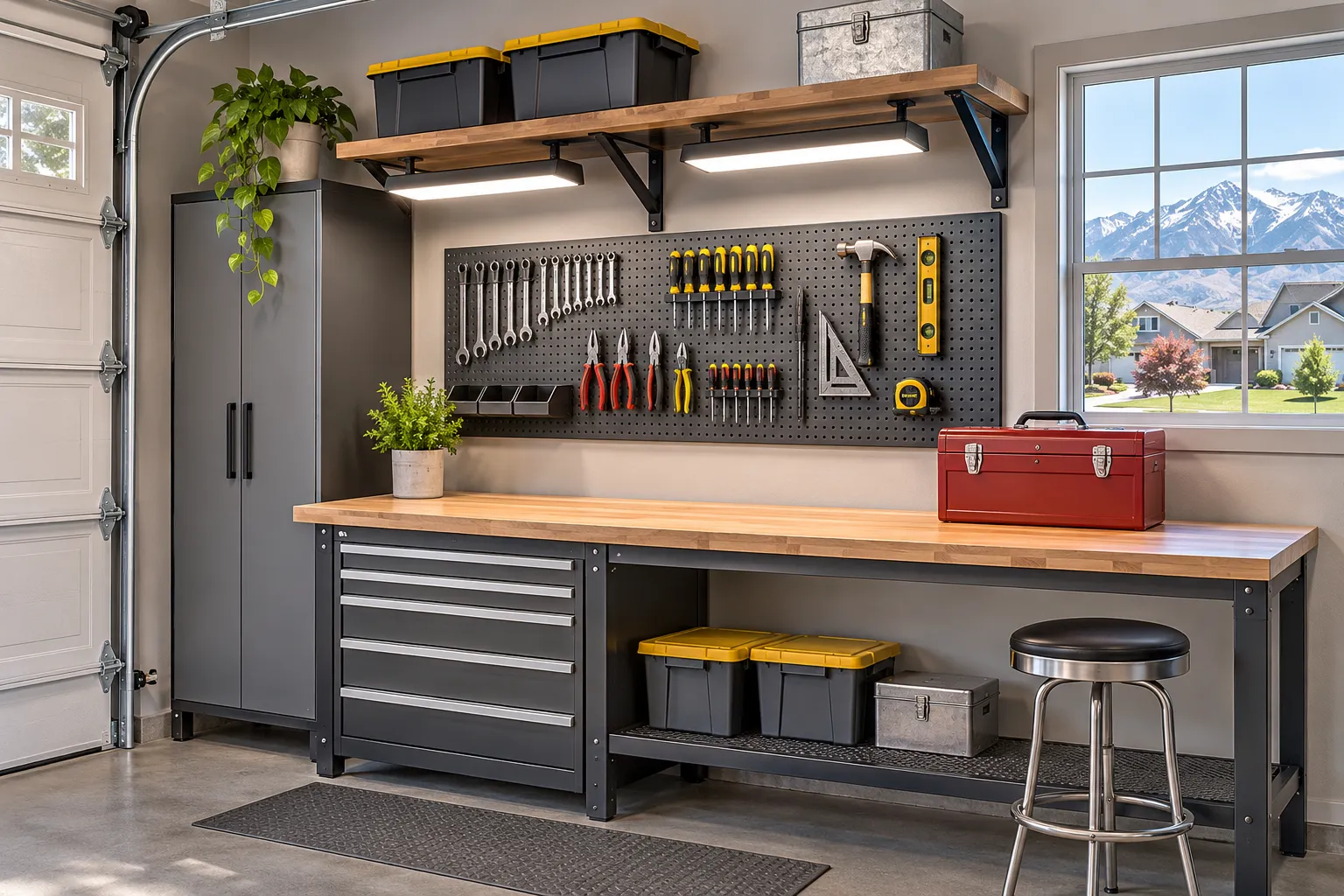
Before setting up a garage workshop, make a list of the equipment you plan to use and where you want to use it. An electrician can then assess the existing outlets, circuits, lighting, and electrical system to determine what changes may be needed.
A drill and a work light may have very different electrical needs from a larger saw, air compressor, or dust-collection system. Planning around your actual equipment helps you create a workspace that is convenient to use without relying on extension cords as permanent wiring.
Whether you are organizing a small workbench or planning a larger hobby space in Sandy, start with the layout and equipment before deciding what electrical work to request.
Start with a map of your workspace
Draw a simple sketch of your garage and mark where you expect to place your workbench, stationary tools, storage, and vehicles.
Consider the way you move through the room. Will a parked vehicle block an outlet? Will a cabinet cover a switch? Where do you need light for detailed work?
You do not need a professional drawing. A few measurements and photographs can help your electrician understand how you want the space to function.
Make a list of the tools and equipment
List the tools you already own and any equipment you plan to add. Include their model numbers or manufacturer instructions when available.
Useful details include:
- The electrical rating shown on each tool or its instructions
- Where each item will be used
- Which tools or equipment may run at the same time
- Whether the equipment is stationary or moved around
- Any battery chargers, dust collection, or other equipment used alongside the tools
Do not assume that two outlets on different walls are supplied by different circuits. An electrician can identify what the existing circuits serve and assess whether they are suitable for the planned equipment.
Place outlets where the work happens
Think about where you will use tools rather than simply counting the outlets already in the garage. An outlet behind a workbench or storage cabinet may be difficult to reach once the workspace is assembled.
Discuss suitable outlet locations with your electrician, including access around doors, cabinets, vehicles, and the bench. The electrical plan should account for the equipment being used and the conditions in the garage.
If you regularly need an extension cord to reach the same workstation, ask whether a permanently installed outlet would be a better fit. The Electrical Safety Foundation says extension cords are intended for temporary use and should not replace permanent wiring.
Do you need a new circuit for a garage workshop?
Not automatically. The answer depends on the tools, what operates at the same time, the existing wiring and circuits, manufacturer instructions, and applicable requirements.
Adding an outlet to an existing circuit does not create additional circuit capacity. Depending on the assessment, an electrician may recommend using a suitable existing circuit, making repairs, adding a circuit, or taking another approach.
Powered Up Inc. provides circuit testing and repair and can discuss your equipment and any existing circuit concerns.
Plan the lighting around your workbench
A single ceiling light may illuminate the garage without providing comfortable light where you measure, assemble, or work on small parts.
Look at the workspace with the garage door closed and your normal lights on. Notice whether your body or shelves cast shadows across the bench. Also consider glare from shiny surfaces and whether storage will block the light.
General garage lighting and focused workbench lighting can serve different purposes. Discuss fixture locations, controls, and suitable equipment with your electrician before installing shelves or finishing walls.
Discuss protection and equipment condition
Ground-fault circuit interrupter, or GFCI, protection is designed to help protect people from electric shock. Ask your electrician to identify the protection serving the garage and determine what is appropriate for the work and applicable requirements.
Before using a tool, look for damaged cords, plugs, or housings. Stop using damaged equipment and arrange repair or replacement according to the manufacturer’s guidance. Never remove a grounding prong to make a plug fit an outlet.
If a circuit trips repeatedly, stop using the equipment associated with the problem and have the cause assessed. Do not repeatedly reset the breaker or replace it with a higher-rated breaker as a workaround.
If you see smoke or fire, leave the area and call 911 from a safe location.
Think about future equipment
Your workshop may grow over time. If you expect to add a larger tool or reorganize the garage, mention that when discussing the project.
An electrician can review the present setup and help you understand options for the equipment you have identified. A future purchase does not automatically mean you need a new panel or a complete rewire; the appropriate work depends on the equipment and existing system.
For a broader renovation, learn about Powered Up’s full remodel and rewiring services.
What to have ready before calling
Gather the following if available:
- Photos of the garage and planned work area
- A sketch showing the workbench, storage, and parking spaces
- Tool model numbers and electrical requirements
- A list of equipment that may operate at the same time
- Details of any tripping, heat, odor, or damaged outlets
- Your plans for lighting and future equipment
You do not need to open the electrical panel or remove outlet covers to gather this information.
Frequently asked questions
Can I use an extension cord permanently for my garage workshop?
No. Extension cords are intended for temporary use, not as a substitute for permanent wiring. If you repeatedly need power in the same location, discuss a suitable permanent outlet with an electrician.
Will adding another outlet give my garage more electrical capacity?
Not by itself. An outlet added to an existing circuit shares that circuit’s available capacity. An electrician can assess the circuit and your equipment before recommending changes.
Does every garage workshop need a dedicated circuit?
No. The need for a separate circuit depends on the equipment, manufacturer instructions, existing electrical system, and applicable requirements.
Does a garage workshop automatically need a panel upgrade?
No. An electrician must assess the existing system and the equipment you plan to use before determining whether panel work is appropriate.
What should I do if a tool repeatedly trips a breaker?
Stop using the equipment associated with the problem and arrange professional assessment. Repeated trips can have different causes, so the tool and circuit should not be diagnosed by guesswork.
Plan your garage workshop with a Sandy electrician
Powered Up Inc. provides electrical troubleshooting, circuit work, lighting, and remodel wiring in Sandy and throughout the Salt Lake Valley, including Draper, Midvale, and South Jordan.
Tell us how you plan to use your garage and which tools you want to power. Contact Powered Up Inc. or call 801-477-0347 to discuss your project.
Helpful resources
Need an Electrician in Sandy, Utah?
Powered Up Inc. serves Sandy and the surrounding Salt Lake Valley. Reach out for a free consultation.